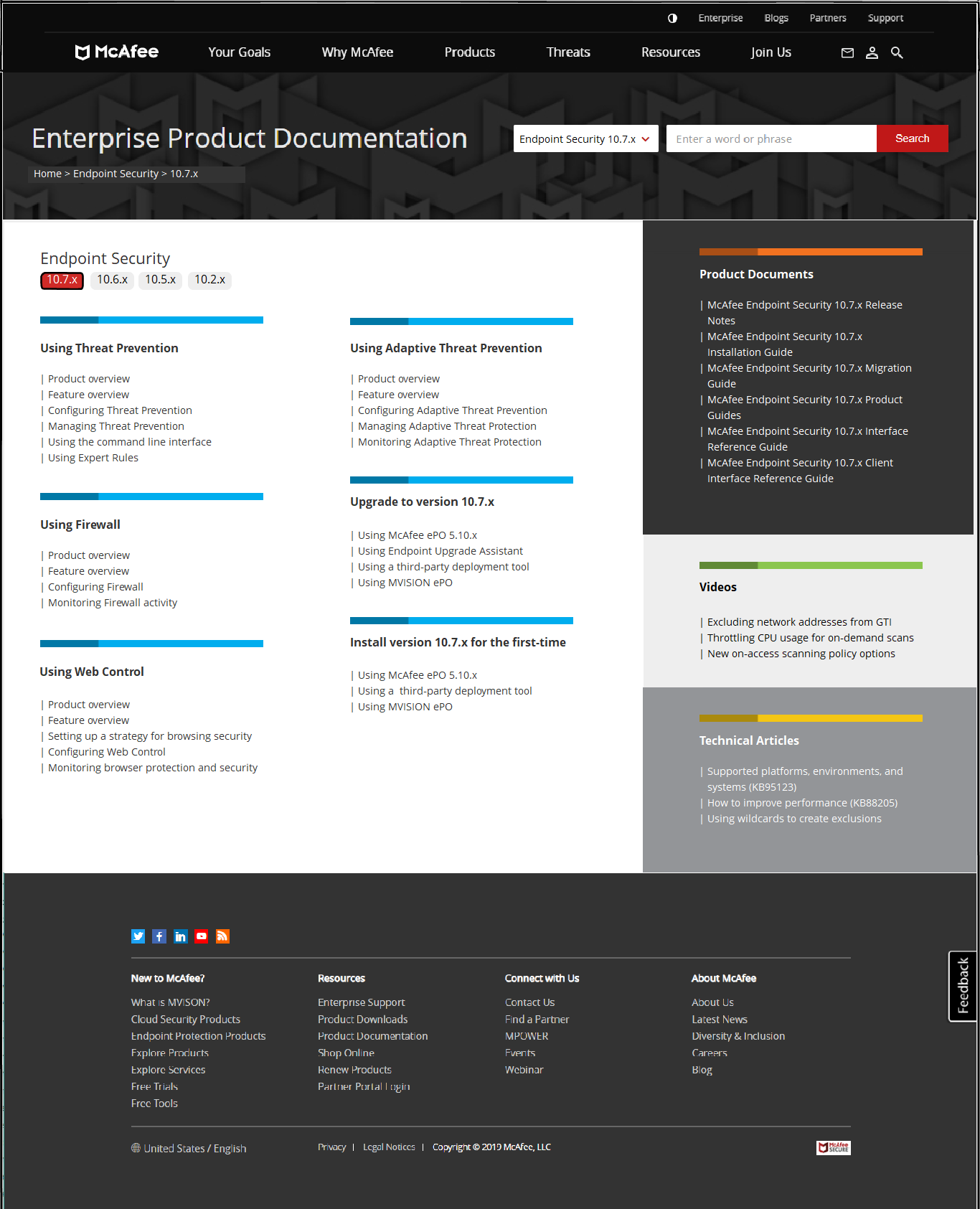
Improving Content Discoverability Through Information Architecture and Structured Navigation
At McAfee, I redesigned the information architecture and content experience for an enterprise documentation website, enabling customers to more efficiently find and navigate product content through structured browsing, improved hierarchy, and clearer pathways to information.
+34% CTR on most accessed products | +22% engagement on product content | Reduced reliance on search through structured navigation
The Challenge
Enterprise customers relied on the documentation site to find content for products they owned or were evaluating, but the experience did not effectively support discovery or navigation.
At the time:
There were no dedicated product pages.
Content was accessed through:
Search built on an overly simplistic information model.
An alphabetical list of products and versions.
Flat lists of documents per product version.
As a result:
Users struggled to locate relevant content efficiently.
Search was overused, but under performing.
There was no clear way to understand product structure or navigate content logically.
The core issue was not a lack of content, but the absence of a scalable information architecture to organize and surface it.
My Role
I led the design of the content experience, including:
Information architecture for product-based navigation.
Content hierarchy and labeling.
Design of product-level entry points (new product pages).
Collaboration with data analytics, content teams, and a third-party platform vendor.
My Approach
1. Reframed the problem as a content retrieval issue
Rather than treating this as a search problem, I identified a deeper issue:
The underlying information model was too shallow to support meaningful navigation.
Content lacked structure at the product level.
Users had no clear entry point into product-specific content.
This shifted the focus to designing a scalable structure for content access.
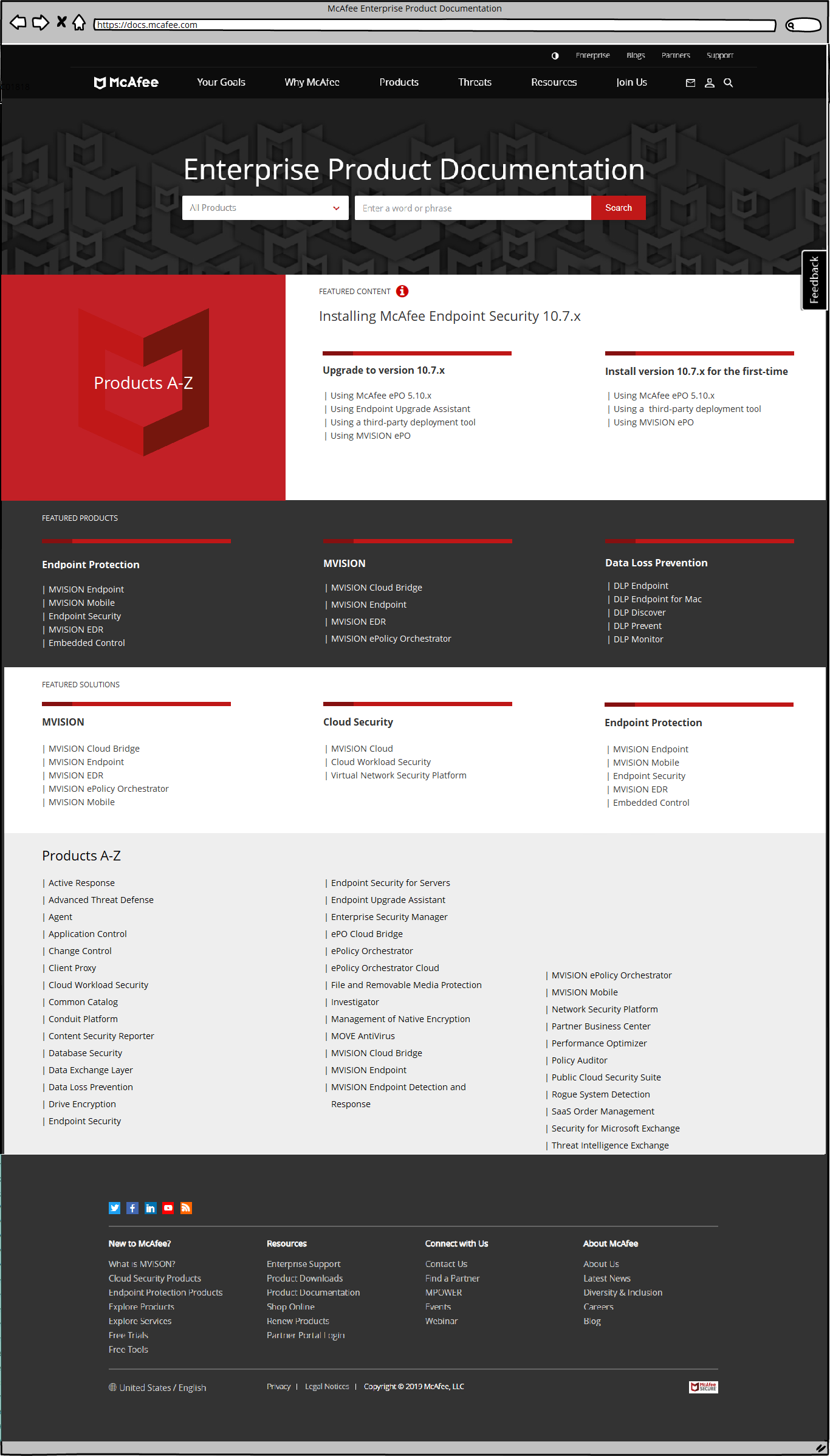
2. Introduced product pages as structured entry points
I created dedicated product pages to:
Serve as a central hub for all content related to a product.
Replace fragmented access points (search + document lists).
Provide immediate orientation for users.
This established a clear and consistent starting point for content retrieval.